John Dahlback Adopts AI Vocal Tools to Enhance Production, Rejects Low-Quality AI Music
Swedish DJ and producer John Dahlbäck has moved beyond the early skepticism that many in the industry felt toward generative AI. In a recent interview with MusicRadar, the 38‑year‑old explained that he now uses artificial‑intelligence tools primarily as a source of inspiration and as a vocal‑editing instrument, rather than as a means of generating complete tracks.
Dahlbäck’s career has spanned collaborations with high‑profile artists such as Kaskade, Benny Benassi and Avicii, the latter of whom he worked with on the track Don’t Hold Back under the alias Jovicii. His experience in the house and EDM scenes has given him a long‑standing familiarity with sampling and remixing. In the interview he noted that, in his early days, he would often try to recreate samples rather than simply splice them into a mix. "The same goes for AI in my case," he said, drawing a parallel between his sampling practice and his current use of vocal‑cloning software.
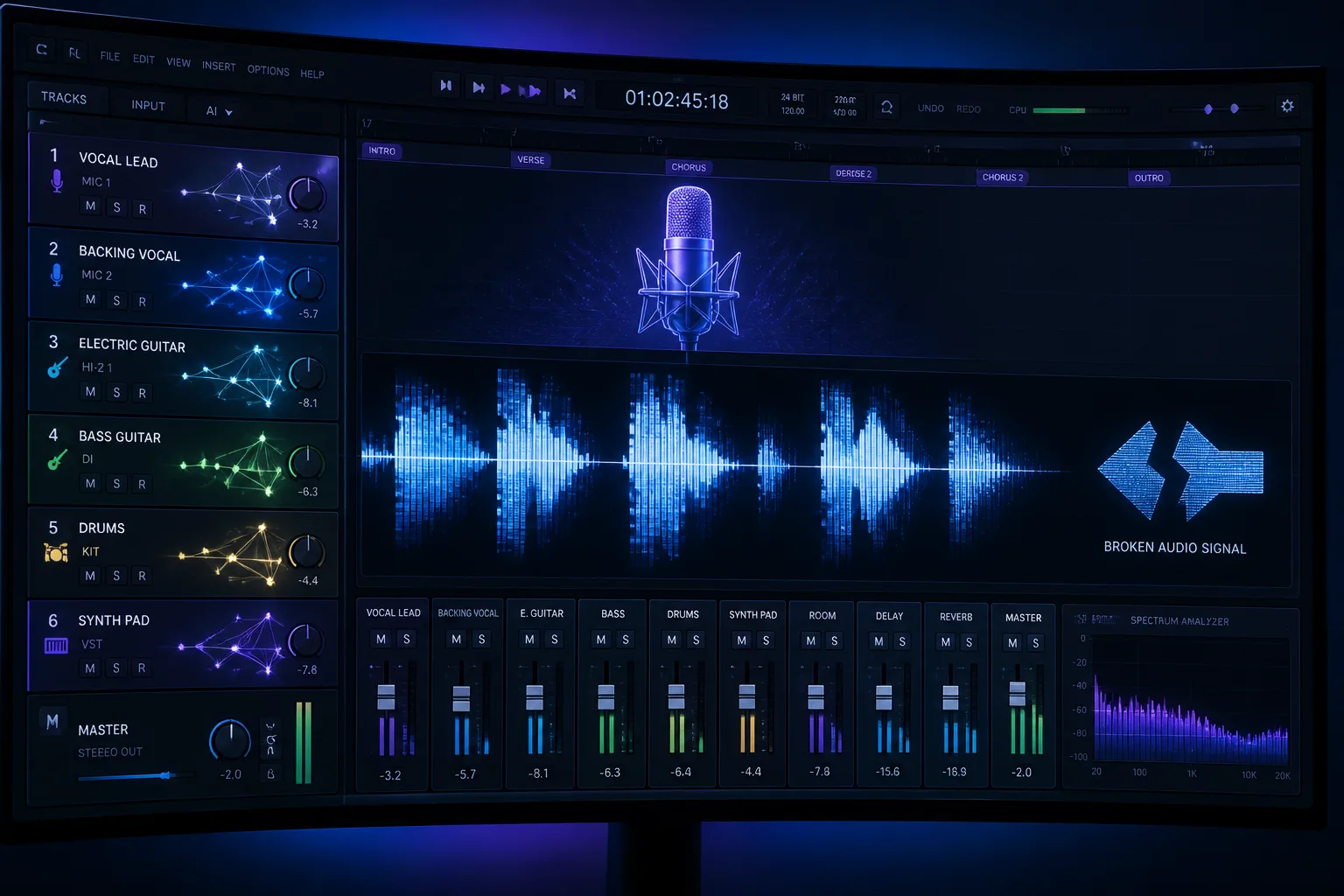
According to Dahlbäck, AI is best approached as an instrument. He compares it to a synthesiser or a library such as Splice: "I feed it the beat I’m working on and it gives me ideas of where to develop it," he explained. The producer also highlighted the value of AI voice‑changing tools. "I sing something in the microphone with my horrible singing voice, and I change that into a beautiful singing voice," he said. This approach allows him to experiment with vocal timbres and harmonies without the need for a studio vocalist.
A practical example of the technology’s utility came from Dahlbäck’s brother, a traditional producer who once faced a missing backing‑vocal track. "He loaded in her acapella and used AI to generate full backing vocals," Dahlbäck recounted. The result was a richer vocal arrangement that the producer described as "brilliant." The story illustrates how AI can fill gaps in a mix when live recording resources are limited.
Dahlbäck also discussed a project involving a well‑known Swedish singer who has been working on a new collaboration. The singer’s team discovered recordings of her singing at the age of five and plans to train an AI model on those early tracks. "So that she can duet herself," Dahlbäck said, expressing enthusiasm for the potential of generative voice models to create age‑appropriate vocal layers.
Despite his positive stance, Dahlbäck remains critical of what he calls "AI slop"—low‑effort, mass‑produced tracks that are generated and uploaded to streaming services without creative input. "I don’t like when it’s just anyone sloppy using AI to just generate a pop song, then export and then upload Spotify. That doesn’t make any sense," he said. The producer’s comments echo a broader industry concern that AI can be misused to churn out generic content that dilutes artistic quality.
In summary, John Dahlbäck’s evolving relationship with AI reflects a broader trend among professional producers who view the technology as a creative aid rather than a replacement. By treating AI as a tool for vocal manipulation, inspiration, and backing‑vocal generation, he demonstrates how established artists can integrate generative models into their workflow while maintaining artistic integrity.