Solid State Logic L550 Plus Consoles Power The Voice France Season 15 with Linked MADI Workflow
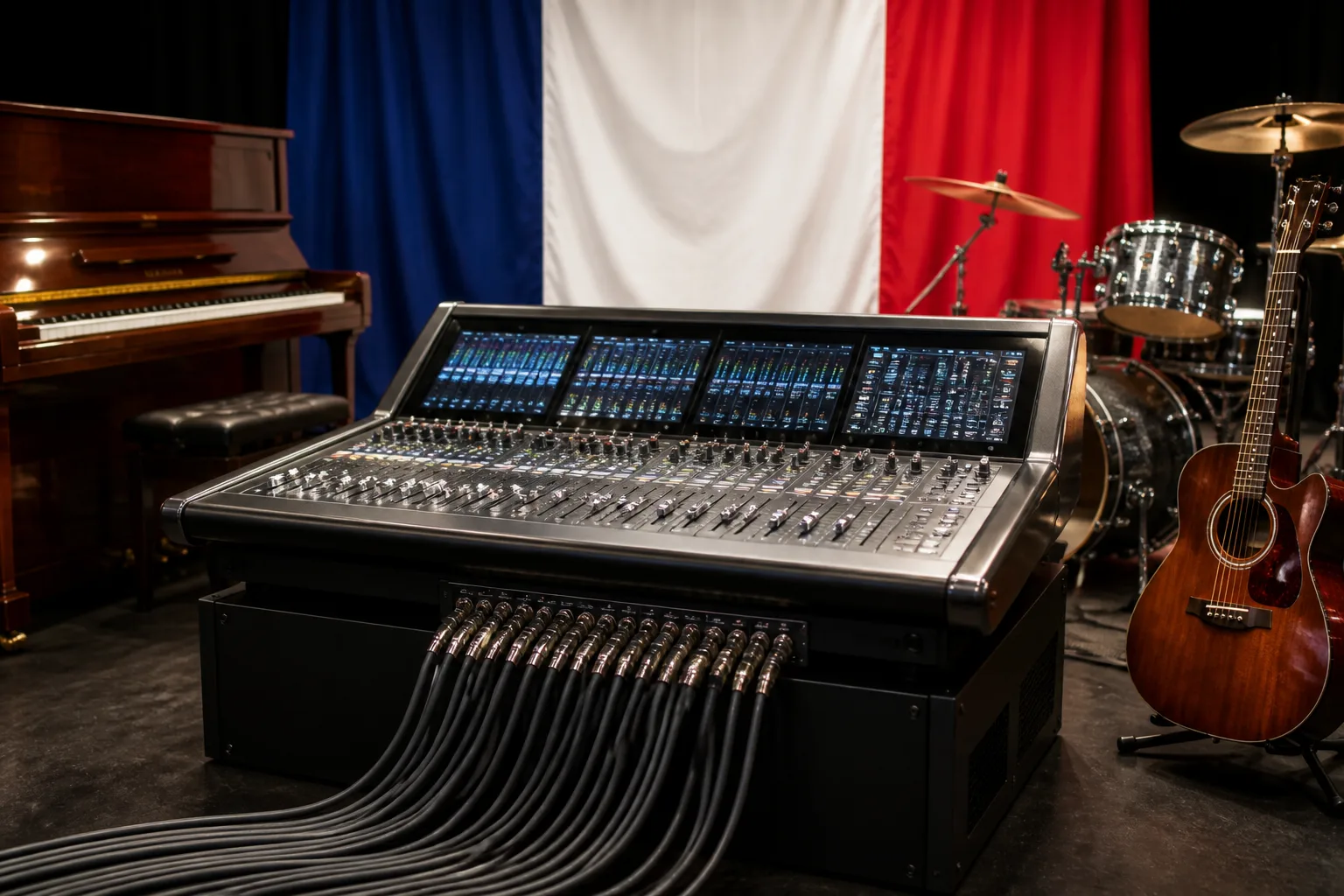
Solid State Logic’s L550 Plus mixing consoles ran the audio engine behind France’s The Voice – La plus belle voix during its fifteenth season, turning the Studio du Lendit in Paris into a networked audio hub. Four desks were wired into SSL’s Blacklight II MADI system, each assigned a clear role: two handled the live broadcast mix, one controlled front‑of‑house (FOH) sound for the singers, and the last managed the monitor mix.
The four L550 Plus units were supplied by Algam Enterprise and integrated by S Group, a touring‑and‑integration specialist out of Alès. The Blacklight II MADI link allowed the consoles to share sources, processing and routing in real time. Two redundant fibre paths ran from the set, giving the broadcast team direct access to orchestra mixes and open microphones from the core console if a fault occurred.
According to the production team, the monitor console set the majority of the gain levels for the orchestra and music feeds, while the FOH console was limited to pre‑amp control for the vocal microphones. This approach kept the singers’ levels consistent for the television output. “The monitor console sends out sources – mainly everything to do with the orchestra and music – and it sets the gains for us,” said Jean‑Marc Aringoli, a producer on the show.
In the control room, the two broadcast desks split responsibilities. One desk received the stereo output from the music console and layered it with vocals, backing vocals, additional instruments and other elements needed for the TV mix. The other desk handled the final on‑air mix, taking the same stereo input and adding the same layers. The separation allowed the FOH engineer to manage vocal gains directly, ensuring broadcast loudness requirements were met while allowing rapid adjustments during live performances.
The linked design also facilitated real‑time assistance between positions. Engineers could send effects across the network to support another console, and string parts could be grouped into premixes before reaching FOH, reducing the number of individual channels that needed to be managed. “Sharing resources is very easy with SSL, where we share MADI,” Aringoli said.
The console’s layer structure helped the team keep pace with the show’s fast tempo. “The ease of use with this console lies precisely in being able to bring sources back very quickly to wherever you want them and, with the multi‑layer system, to organise your layout properly so you can find your way around very easily and follow the show as consistently as possible,” Aringoli explained.
On the broadcast side, stems were processed before reaching the final master path. Internal console effects handled the orchestra’s dynamics and time‑based processing, while external hardware could be inserted into the chain for additional correction. “We also have an A/D rack into which things are inserted. The idea is also to put the whole chain in phase in a general sense,” Aringoli said.
The FOH side operated at concert‑level sound pressure, matching the expectations of performers and coaches. “We only have coaches who perform live. They are used to a certain sound level, and we have to provide them with that sound level. So we work fairly loud,” he added.
With around 130 rehearsed songs stored as snapshot scenes, the production relied on the console’s Query function to verify routing and levels quickly before each number. “I quickly check with Query on my send to know what is going to be sent, for example, in an auxiliary to an effect. It lets me very quickly check what is going into my stem and redo the levels easily,” Aringoli said.
The use of SSL L550 Plus consoles and a Blacklight II MADI network illustrates a broader trend in live television production: dividing audio tasks across multiple linked desks rather than concentrating them on a single console. This approach offers greater flexibility, redundancy, and the ability to manage complex mixes in real time.
At present, the four L550 Plus desks remain in operation for the remainder of the season, which concluded on 30 May with the victory of 19‑year‑old Lady O. The setup demonstrates how modern live‑TV audio workflows can combine high‑end hardware, digital networking and clear role definitions to deliver consistent, high‑quality sound for both performers and viewers.