DJ_Dave Brings Live Coding to Mainstream Dance Stage
DJ_Dave, the stage name of Sarah Davis, is a Los Angeles‑based live music coder and producer who has been expanding the reach of algorithmic performance into mainstream venues. The artist, who first discovered live coding while taking a college class in fashion, now uses the web‑based environment Strudel to generate dance‑floor‑ready tracks and plans a tour of the United States, Europe and the United Kingdom in the second half of 2026.
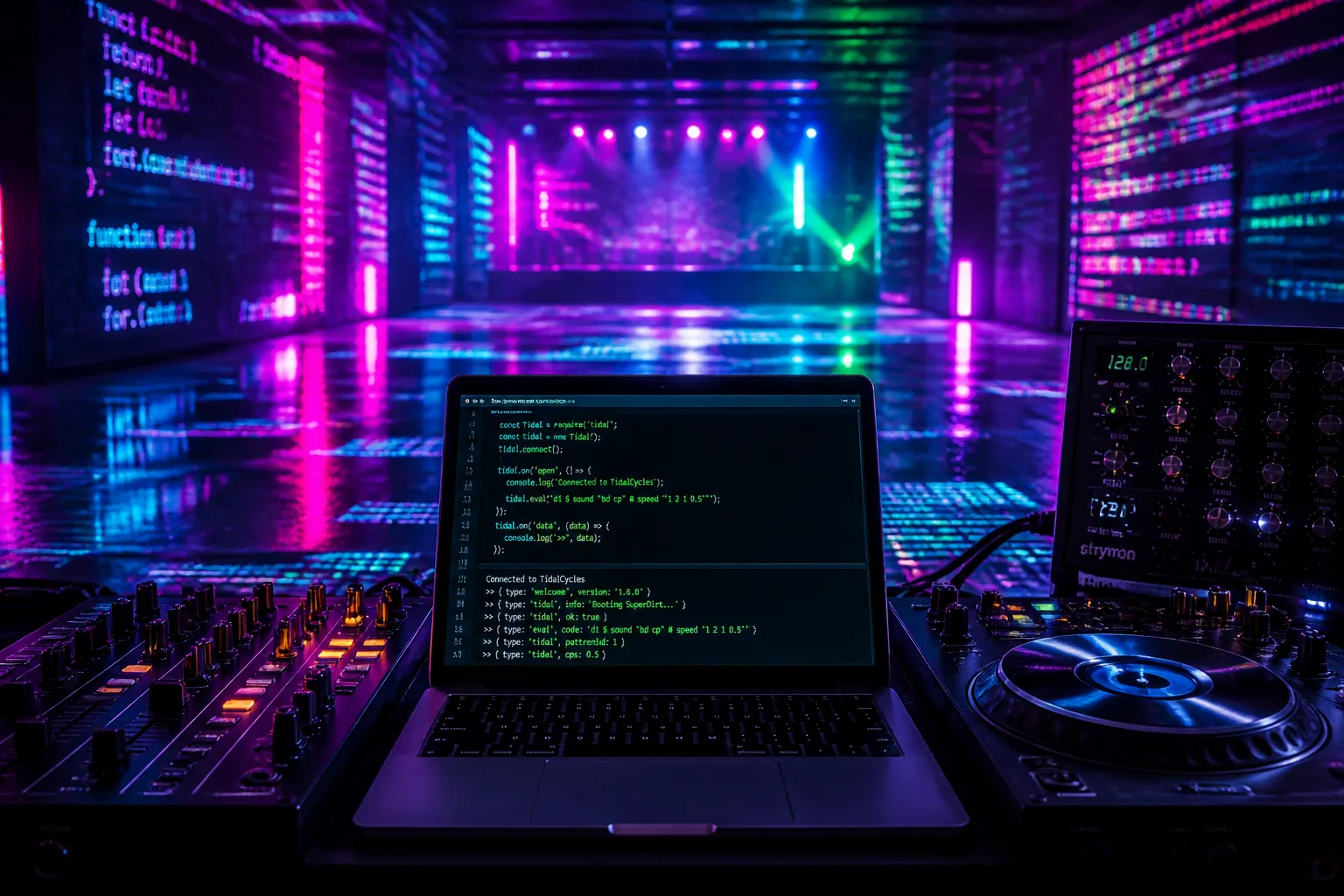
Live coding is a performance technique in which the musician writes source code in real time to produce sound. The code is typically projected for the audience, creating a transparent view of the creative process. DJ_Dave’s work is rooted in this tradition. She explains that the code she writes can produce anything from simple sine waves to complex sequences: “It can be any type of sound, any genre of music. My specific genre of interest has always been dance music.”
The artist’s first public exposure to the practice came by chance during her undergraduate studies. After enrolling in a live‑coding class, she was “hooked” and began performing outside of traditional algorave spaces. She has played in New York clubs, the Echo in Los Angeles, and even a Met Gala after‑party hosted by Grimes. In recent years, she has integrated live vocals into her sets and automated parts of her code so she can move from the laptop to the centre stage.
A key element of DJ_Dave’s approach is screen sharing. She admits that it can be “anxious” but argues that transparency is at the heart of the live‑coding experience. “The way it’s performed is so direct,” she says. “I’m cueing these sounds, people are watching them be triggered, hearing the music be created in real time.” She has experimented with visual overlays but has largely stripped them away to keep the focus on the code.
In 2024, DJ_Dave co‑authored an academic paper on live coding in pop music and launched an “Always Learning Tour” of U.S. college campuses. The tour combined daytime coding workshops and evening performances, aiming to raise awareness of the practice among students. She notes that the main barrier to wider adoption is a lack of public awareness and the need to learn basic console commands.
The artist’s music production workflow blends live coding with traditional digital audio workstations. She uses Strudel to generate vocal loops and other stems, then imports them into Logic Pro for arrangement. She prefers to keep a degree of “live” character in her tracks, often leaving sections uncut to preserve the improvisational feel. Her first three releases in early 2020 were raw recordings from Strudel with no mixing, which she later distributed on Spotify.
DJ_Dave’s upcoming full‑length album is described as a collection of high‑energy dance songs that also explore other sub‑genres she has not previously tackled. She cites her experience remixing artists such as Grimes, Tove Lo and Channel Tres as influencing her own production style. “I love taking pre‑existing sounds and manipulating them to sound brand new,” she says. “Creating the album, I was like, ‘well, if I love remixing so much, why not just remix my own songs?’”
The artist’s perspective on technology is nuanced. While she is optimistic about the potential of code‑based music, she criticises planned obsolescence and corporate control of creative tools. She has expressed enthusiasm for open‑source solutions that give artists “power back in their hands.”
DJ_Dave’s career illustrates how a niche subculture can move toward broader audiences. By combining live coding, transparent performance, and mainstream dance production, she is positioning herself as a bridge between experimental and commercial music scenes.
The next steps for DJ_Dave include completing her album, finalising tour dates, and continuing educational outreach through workshops and lectures. Her work remains a case study in how open‑source tools, live performance, and genre‑blending can coexist in today’s music industry.