Jaipur Artist Ganesh Mahawar Revives Jal Tarang, Water-Bowl Instrument Facing Decline
On World Music Day, the streets of Jaipur echoed with the delicate tones of a forgotten instrument. Ganesh Mahawar, a local musician who spent nearly a decade hunting for the right vessels, took center stage to demonstrate the Jal Tarang—a set of ceramic or metal bowls that sing when water levels are adjusted and rims struck with bamboo sticks.
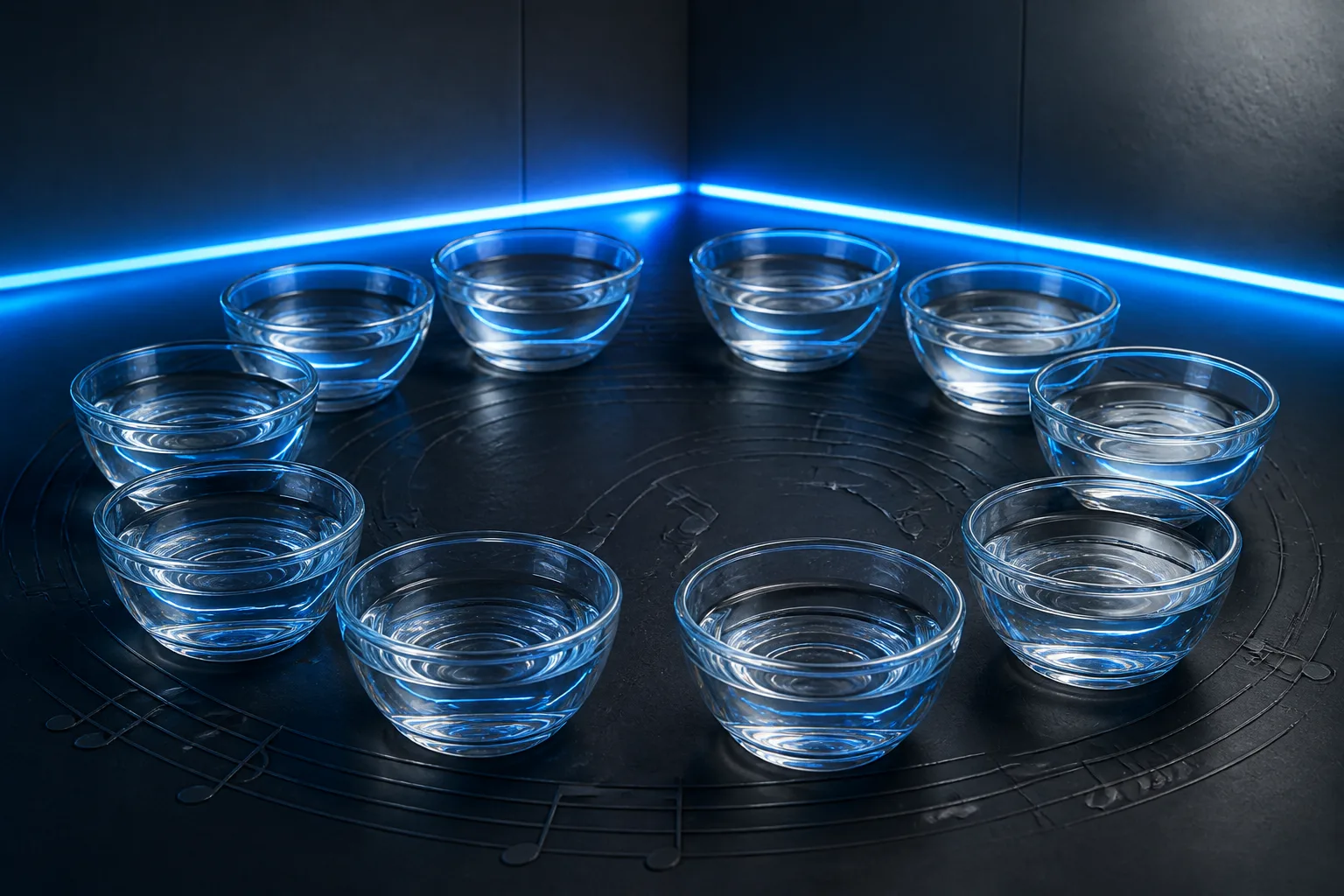
The Jal Tarang, literally “water wave,” has woven itself into Indian musical lore for centuries. Sanskrit texts and ancient treatises record its presence in royal courts and religious ceremonies. Classified as an idiophone in the Hornbostel–Sachs system, a typical set contains 15 to 22 bowls. Each bowl is tuned to a specific pitch—Sa, Re, Ga, Ma, Pa, Dha, Ni, Sa—by varying the volume of water inside. The performer then taps the rim with a small wooden or bamboo beater, producing a resonant tone that drifts like liquid.
Mahawar’s craft is built on meticulous calibration. He notes that temperature can shift pitch; extreme cold or heat can impede sound. To preserve consistency, he carries his own supply of water during performances. Finding suitable bowls was a painstaking eight‑year quest, as not all ceramic vessels respond to the tuning required for a complete scale.
Born in Jaipur’s Walled City, Mahawar first learned the art from his maternal grandfather, his first guru, and later refined his technique under his maternal uncle. His repertoire spans popular Hindi songs such as “Gauri Ka Palla Latakne” and “Chhookar Mere Man Ko” as well as traditional folk pieces like the Rajasthani Maand “Kesariya Balam.” Through these performances, he seeks to preserve the instrument’s heritage and introduce it to new audiences.
Despite its historic prominence, the Jal Tarang has become rare. The rise of electronic and digital music has reduced the number of practitioners, and stage appearances are now limited. Mahawar stresses the importance of engaging younger generations. While some artists in Rajasthan are actively working to keep the Jal Tarang alive, the overall trend remains one of decline.
The instrument exists in variants such as the Kasht Tarang (wooden) and Lauh Tarang (metal), each sharing the same water‑filled bowl principle but differing in material. All variants are considered integral parts of the broader Jal Tarang family.
Its soothing, meditative sound has made the Jal Tarang a staple in classical, devotional, and spiritual contexts. The unique timbre—often described as a reflection of water’s natural fluidity—continues to attract listeners who appreciate its calming qualities.
While the instrument’s future remains uncertain, Mahawar’s dedication and public performances on World Music Day serve as a reminder of the Jal Tarang’s cultural significance. By sharing his craft, he hopes to inspire renewed interest and ensure that the resonant waves of water‑filled bowls are heard for years to come.
Today the Jal Tarang remains a niche instrument with a small community of performers. Efforts to revive it are ongoing, but its survival depends on continued education, performance, and public awareness.