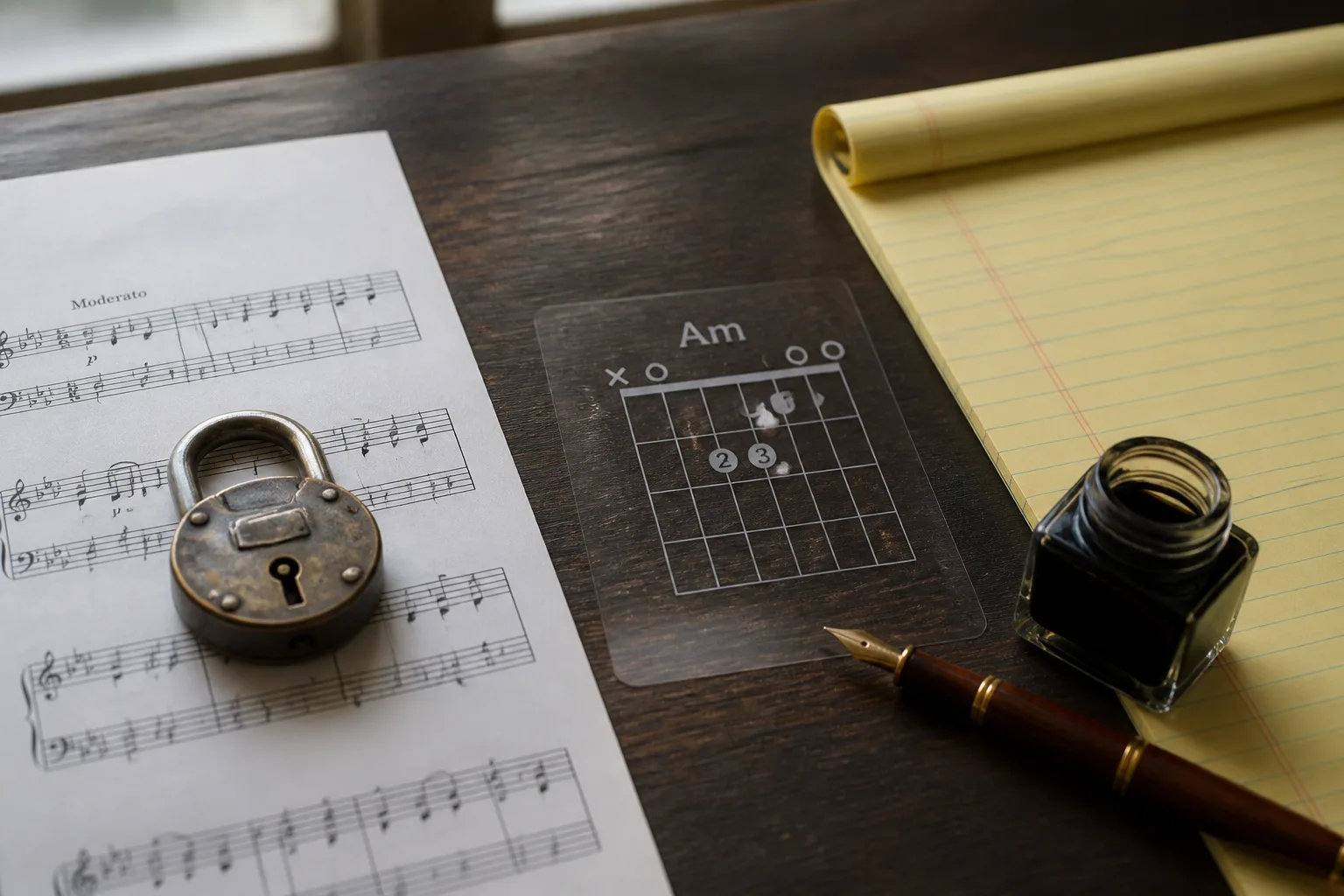
Copyrights Long-Standing Rules Still Guard Music, But Titles and Chords Remain Free
If you’re a musician, the word “copyright” often feels like a maze. Yet, for more than three centuries, a handful of laws have set the boundaries that keep the industry moving.
The Statute of Anne, passed in Britain in 1710, was the first modern copyright law and laid the groundwork for the protection of creative works worldwide. A month later, the United States adopted a similar framework, and Canada followed in 1832, reaffirming the law in 1921. These statutes were designed to give authors exclusive rights to reproduce, distribute, and perform their works for a limited period, thereby encouraging the creation of new material.
In music, the early laws were extended to cover sheet music, melodies, and lyrics. The United States expanded protection in 1831, ensuring that a song’s composition could not be copied without permission. Today, if a new track sounds too close to an existing one, the creator may face a plagiarism lawsuit. High‑profile cases—such as Robin Thicke and Pharrell Williams’ Blurred Lines and Ed Sheeran’s Shape of You—illustrate how costly and uncertain these disputes can be.
However, not all musical elements are protected. Song titles are not subject to copyright, and the same is true for chord progressions. A title such as Hold On can be used by multiple artists, from Santana to Justin Bieber, without legal risk. Chord progressions, the building blocks of harmony, are also free to use. Guitar riffs, which are essentially specific chord sequences, fall under the same rule. This means that while a melody or lyric can be defended in court, a simple progression like the I‑V‑vi‑IV sequence found in countless pop songs cannot.
The distinction matters for producers, songwriters, and sound designers. Knowing that titles and progressions are public domain allows creators to experiment without fear of infringement. Conversely, the protection of melodies and lyrics means that any new composition must be carefully checked against existing works, especially in an era of automated similarity detection tools used by streaming platforms and copyright holders.
The modern music industry continues to grapple with these legal boundaries. Licensing agencies and publishing companies often rely on copyright to secure royalties, while royalty‑free libraries provide pre‑licensed samples and loops that avoid the need for individual clearance. AI‑generated music platforms, which can produce new melodies from existing data, must also navigate the fine line between inspiration and infringement.
In Canada, the 1832 colonial law was reaffirmed in 1921, and the country now follows the Berne Convention standards, which require a minimum term of life of the author plus 70 years. The United States, after the 1976 Copyright Act, sets a similar term but also allows for a 95‑year period for works published before 1978. These timelines determine when a song enters the public domain and can be freely used.
For creators, the practical takeaway is that while you can freely borrow a chord progression or title, you must ensure that any melodic or lyrical content is original or properly licensed. Producers using loops from royalty‑free libraries should verify the license terms, especially if the loops are derived from copyrighted works.
In short, the foundational copyright laws established over two centuries ago continue to shape the music industry today. They protect the expressive elements of a song while leaving titles and harmonic structures in the public domain, giving creators a clear framework for both inspiration and legal compliance.