
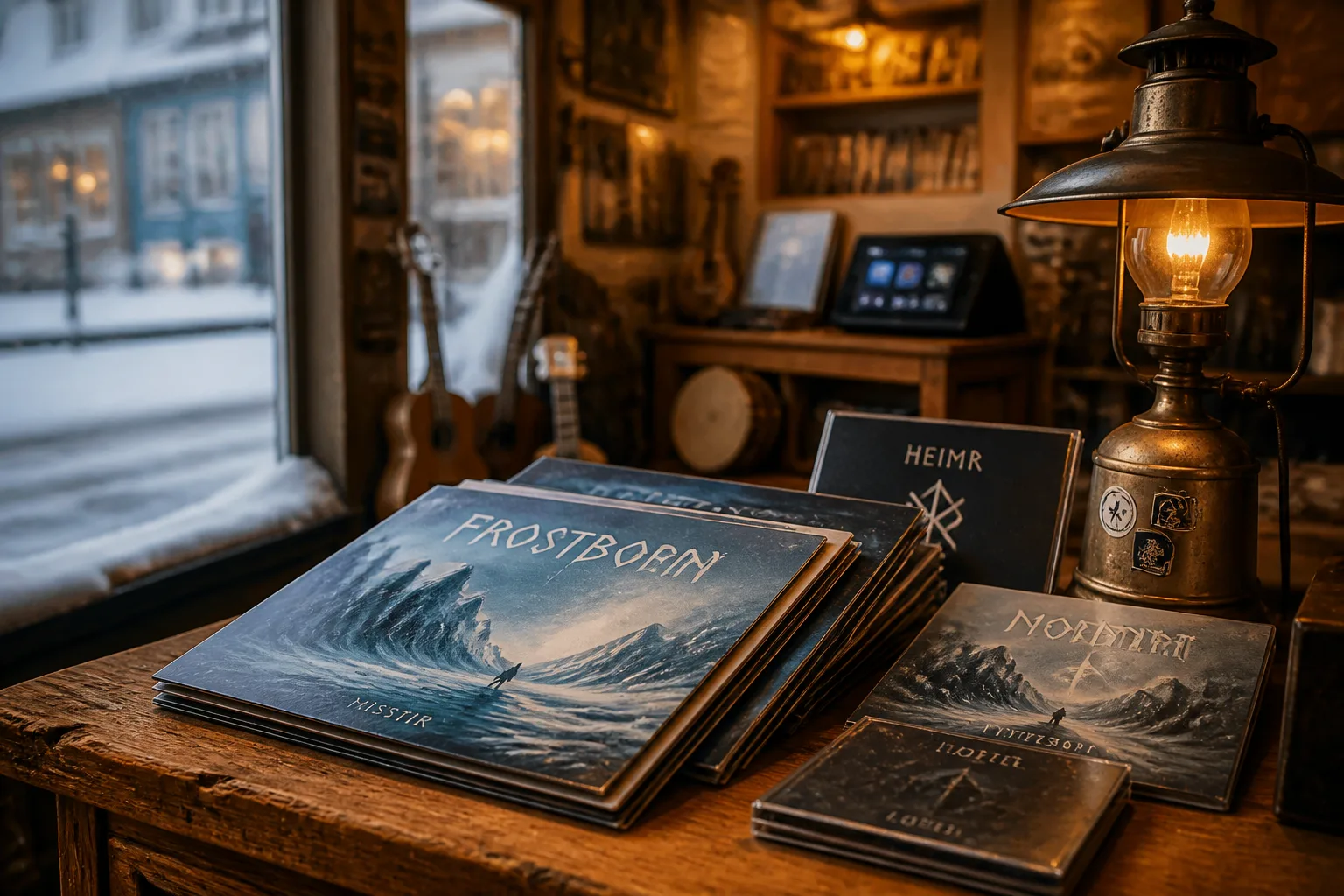
Icelandic Music Outperforms Streaming in Physical Sales, New Data Shows
In a country where digital streaming dominates the global music landscape, fresh figures from the Icelandic Record Producers Association reveal that local artists are still reaping more revenue from vinyl and CDs than from online streams.
The report shows that releases issued by Icelandic labels contribute 20.5 % of the nation’s total streaming income, compared with 34.2 % of revenue generated by physical formats. The disparity underscores a stark contrast between Iceland’s market and worldwide trends, where streaming is the primary source of recorded‑music earnings.
Iceland’s population—just under 400 000—does not dampen demand for tangible music products. The data focus exclusively on releases from domestic record labels; recordings distributed by international companies are classified as foreign releases, which explains their lower share on streaming platforms.
Reykjavík’s own record shop, owned by Jóhann Ágúst Jóhannsson, highlights why physical media remain vital. "Streaming has changed how listeners discover music, but it does not eliminate the need for traditional distribution," he said. "Vinyl and CDs give releases a physical presence that can attract attention in a crowded digital catalogue." Producing tangible copies is costly, but the shop notes that many musicians offset these expenses by selling merchandise alongside albums. Icelandic singer‑songwriter Lúpína, for example, paired T‑shirts and postcards with the launch of her latest album.
The shop owner also observes a shift in release strategy among younger artists. Instead of dropping a full album all at once, many now issue a series of singles over an extended period before compiling them into a full‑length record. This approach keeps audiences engaged and creates multiple opportunities for physical sales.
Public funding remains a critical support mechanism for Icelandic music production and promotion. The association noted that competition for grants is intense, yet the financial backing helps artists cover the higher costs of physical production and marketing.
Taken together, the findings suggest that Iceland’s music industry continues to operate on a hybrid model. Streaming offers broad reach, while physical formats maintain a vital revenue stream and a marketing advantage for local releases. Record shops, artists, and producers appear to be adapting to this dual reality.
At present, the Icelandic Record Producers Association has not announced further data releases. Industry observers will likely track how the balance between digital and physical sales evolves as new releases come out and as global streaming policies shift.