Heiko Hopfinger, BassLab Founder and Composite Instrument Pioneer, Dies at 60
When the world of bass and guitar lost a pioneer on June 10, 2026, the industry felt the absence of Heiko Höpfinger, the German physicist‑luthier whose monocoque composite instruments reshaped modern stringed instruments.
Höpfinger was born in 1966 in Kassel, a city on the Fulda River. He began with classical guitar before moving to electric bass and guitar. After high school he enrolled at the University of Kassel to study physics, specializing in energy‑storage systems. While working on fuel‑cell research for the European Space Agency’s Hermes orbital glider program, he experimented with laminated composites for small aircraft models. The same analytical mindset later guided his work on musical instruments.
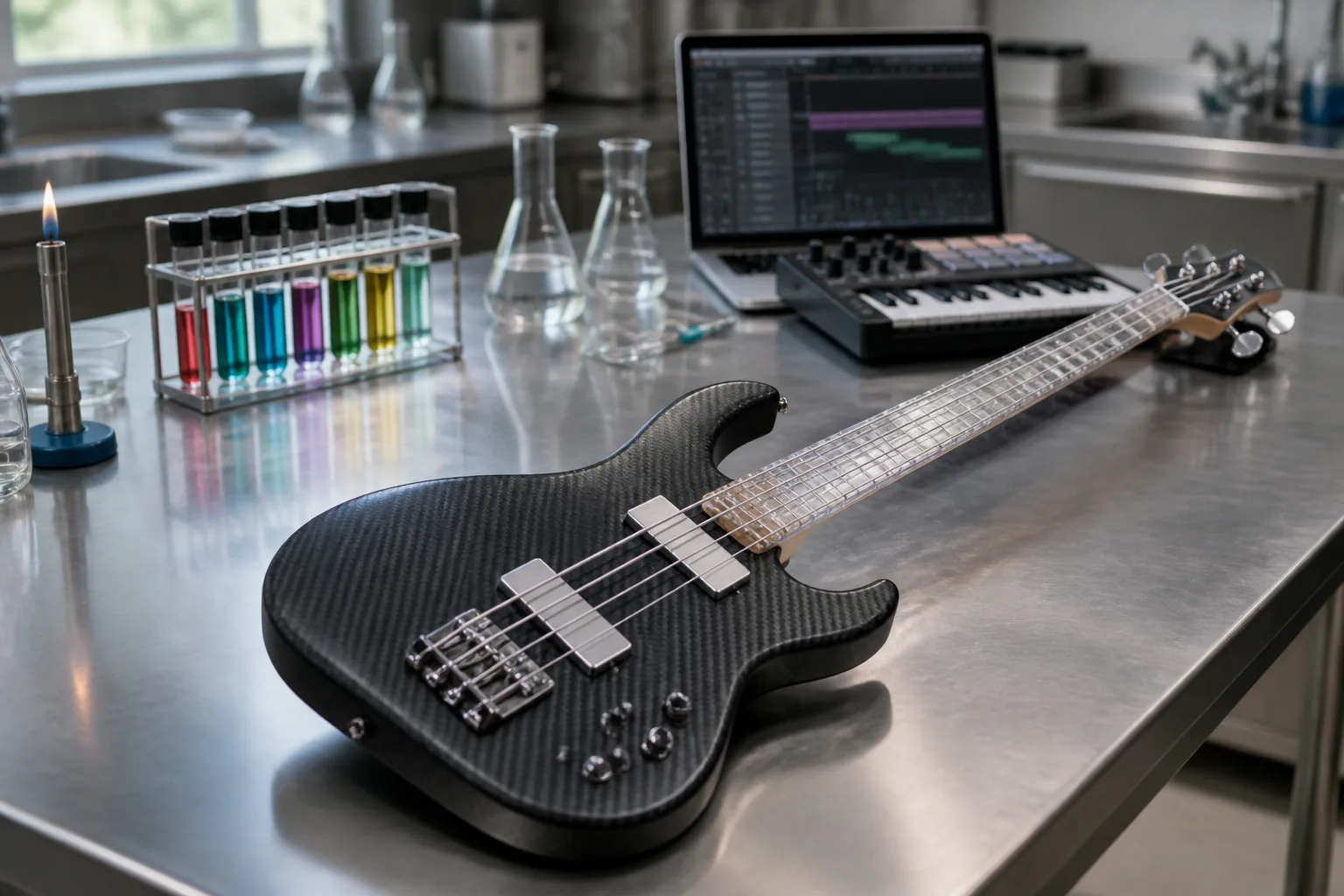
In 1997 he founded BassLab and introduced the company’s proprietary “Tuneable Composite,” a fiber‑reinforced material that could be molded into a single‑piece hollow shell. The monocoque construction eliminated the need for a separate neck and body, cutting weight while preserving structural integrity. Because the composite was largely insensitive to temperature and humidity, instruments could be shipped and played in a wide range of climates without tonal variation.
BassLab’s first instruments appeared at the Frankfurt Music Fair and the NAMM Show. The company’s basses were noted for their light weight, ergonomic shape, and tight mid‑range punch. Over time the product line expanded to include guitars, violins, drums, and even a Chapman Stick model. Höpfinger’s collaboration with designer Ned Steinberger produced a viola that combined Steinberger’s headless concept with BassLab’s composite material.
Höpfinger was also a regular contributor to Premier Guitar magazine, where he wrote the “Bass Bench” column. In that column he explained complex physical principles in plain language, making advanced concepts accessible to musicians and builders alike. His writing style, marked by humor and clarity, earned him a loyal readership.
Beyond instrument design, Höpfinger was known for his enthusiasm for motorsports, motorcycles, and Apple technology. Colleagues described him as approachable, willing to help, and calm in discussion. Obituaries and tributes often highlighted these interests, underscoring the breadth of his curiosity.
BassLab remains a small, hand‑crafted operation based in Kassel. The company distributes its instruments worldwide, with customers in Australia, Austria, Canada, France, Japan, Sweden, Switzerland, the United Kingdom, and the United States. For customers with pending orders, the company’s website (basslab.de) provides an email address for contact.
Höpfinger’s death has been met with condolences from the international bass and guitar community. While no official statement has been released by BassLab, the company’s website posted a brief memorial noting his contributions to instrument design and the music industry.
The legacy of Heiko Höpfinger lies in his application of physics to musical instrument construction. By combining composite materials with precise engineering, he created instruments that are lighter, more stable, and less affected by environmental factors than traditional wooden models. His work continues to influence luthiers and designers who seek to push the boundaries of instrument technology.