Jeff Mills to Debut Interdimensional Live Project "Stargate" at MUTEK Montreal
Jeff Mills, the Detroit techno pioneer who co‑founded Underground Resistance, will launch a new live project called Stargate at the MUTEK festival in Montreal on August 28, 2026. The show will combine audio‑visual performance, tribal‑style beats, analog synthesizers and a narrative that draws on the science‑fiction concept of wormholes.
The Stargate project is a continuation of Mills’ long‑standing fascination with the idea of interdimensional travel. He has said that the concept is inspired by the Einstein‑Rosen bridge, a theoretical shortcut between two points in spacetime that is often described as a wormhole in popular culture. Mills has also referenced the 1994 film Stargate, which depicts an ancient ring that creates a wormhole, and he believes that humanity may one day be able to access such portals.
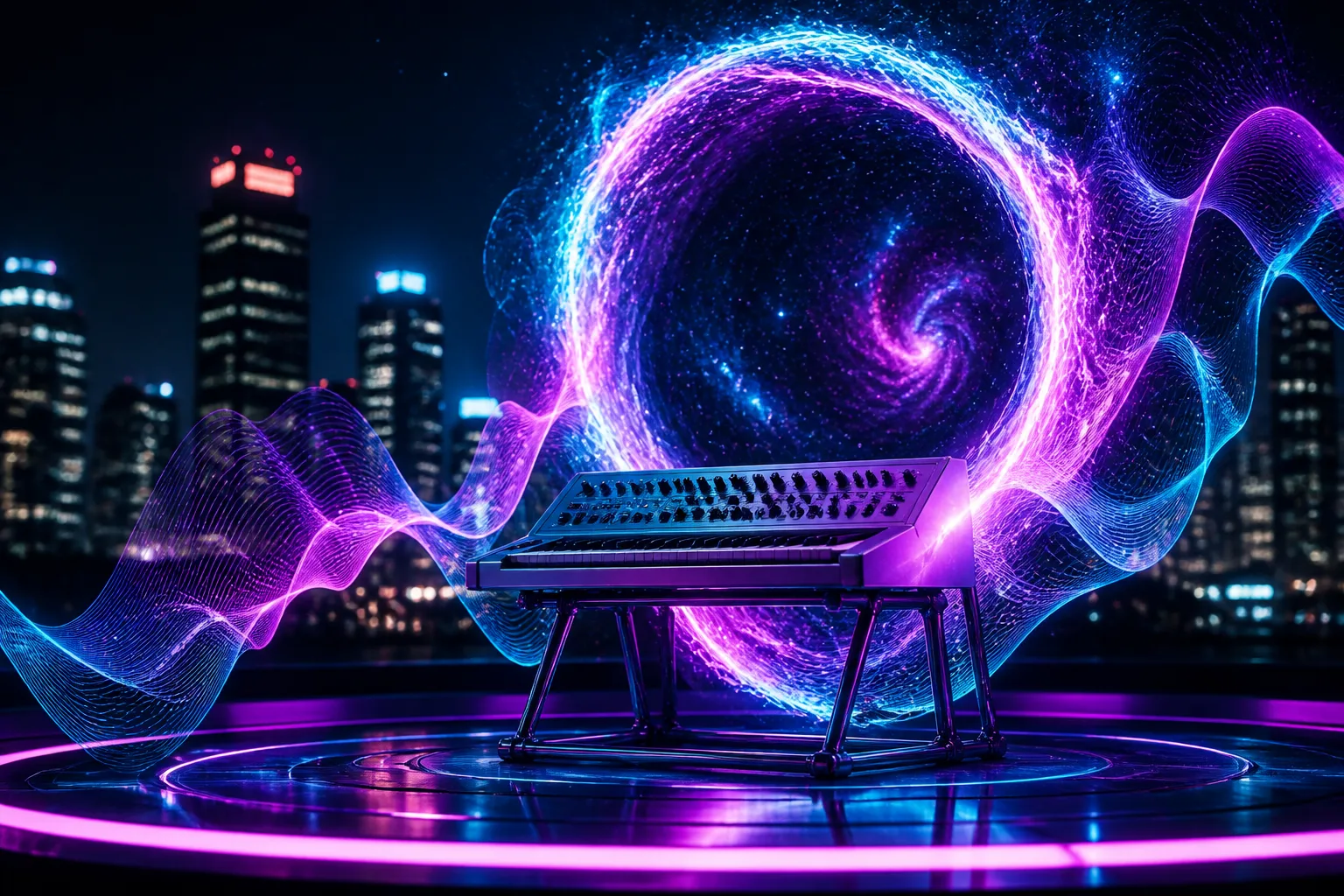
Mills’ performance will be staged in the MUTEK venue, which he has described as a spacecraft. The dancefloor will represent space, the stage will serve as the cockpit, and the central element of the show will be a visual representation of a stargate that the audience will “travel” toward. The audio‑visual design will be created with the help of AI tools that Mills uses for research and scenography, but he has clarified that the AI is not used to compose or edit the music.
Musically, Stargate departs from Mills’ typical techno and jazz fusion. He will focus on tribal beats and analog synthesizers used in a narrative way, creating a sound that he describes as “tribal music” that could have been used to initiate ancient space travel. The project also references his recent collaboration with Jean‑Phi Dary and Prabhu Edouard on the electronic‑jazz album Tomorrow Comes the Harvest, which was named after a work by Afrofuturist author Octavia Butler.
Mills has said that the show is meant to be a dialogue between science, science‑fiction, and electronic music. He believes that the exploratory nature of techno and the curiosity that drives astrophysics share a common goal: to discover truth. In interviews, he has emphasized that the performance will encourage listeners to consider the relationship between music and the possibility of space travel.
The MUTEK festival, held annually in late August in Montreal, is known for its focus on electronic music and digital arts. The 2026 edition runs from August 25 to 30 and features more than 120 artists from 28 countries. Mills has performed at MUTEK before, using the platform to present new concepts, such as a performance inspired by the lunar surface and another that incorporated folklore from indigenous peoples.
Mills’ use of AI is limited to research and concept development. He has explained that AI assists in organizing ideas and refining production plans, but the actual music creation remains a human process. He sees AI as part of a long line of tools that help musicians, from early mixing consoles to modern digital audio workstations.
The Stargate show will also reference the film Stargate and the idea that ancient civilizations may have built similar portals. Mills has suggested that the concept of stargates is not purely speculative, and he encourages audiences to explore the science behind wormholes. He recommends Arthur C. Clarke’s Rendezvous with Rama as a reading that provides context for the themes explored in the performance.
Mills has stated that the project is ready for public presentation because the current era has made space travel and advanced computing more accessible. He believes that the conversation about interdimensional travel is becoming more mainstream and that a performance like Stargate can contribute to that dialogue.
The Stargate debut at MUTEK will be Mills’ first major live presentation of the project. The performance will feature a mix of tribal rhythms, analog synth textures, and immersive visuals designed to simulate a journey through a wormhole. The show is scheduled for August 28, 2026, and tickets are available through the MUTEK website.
Mills’ project illustrates how contemporary electronic musicians are engaging with scientific concepts and speculative fiction, using new technologies to create immersive experiences that challenge traditional performance formats.