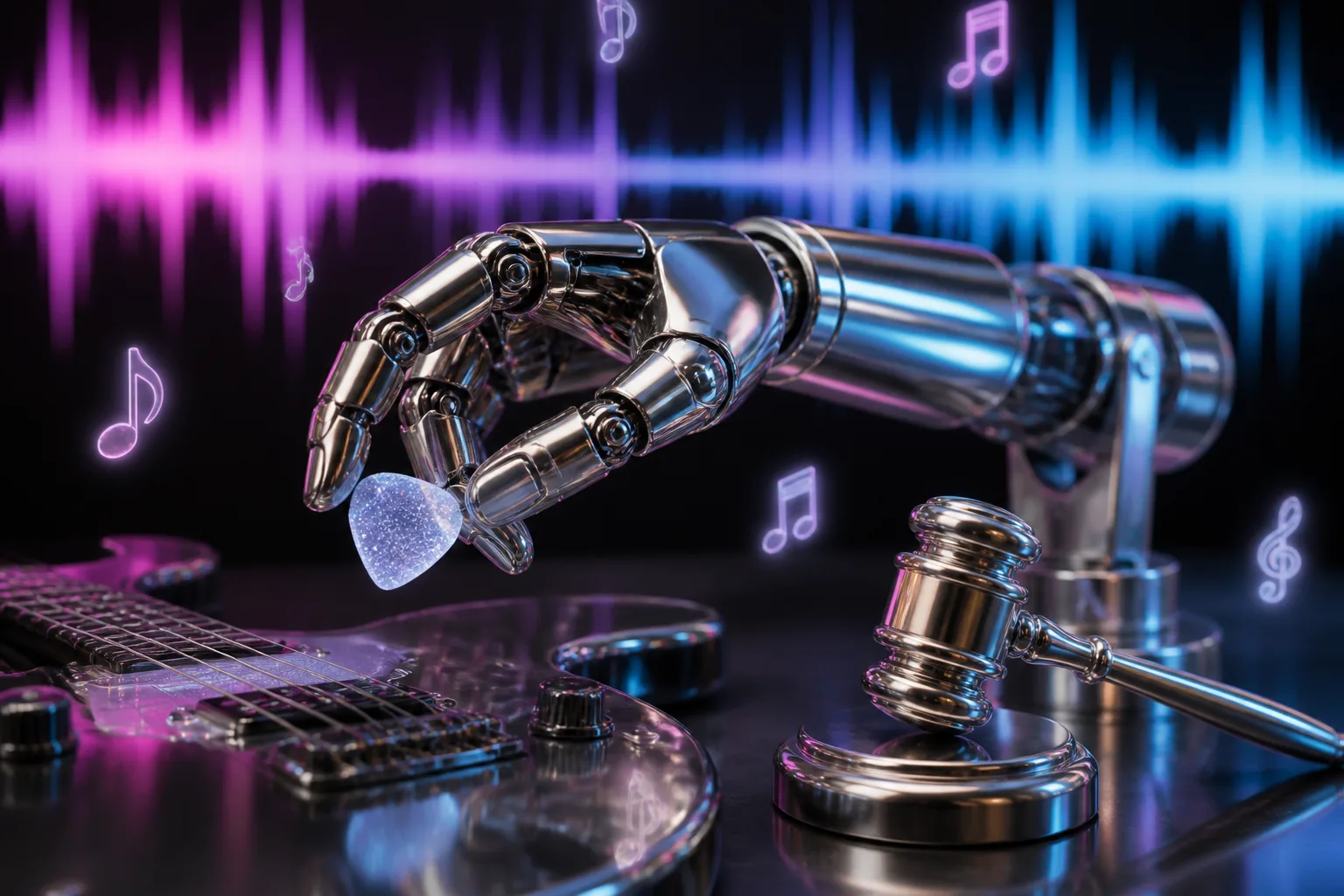
Tift Merritts Sugar Launches Amid AI-Music Debate and New Labor Legislation
On June 26, 2026, Grammy‑nominated folk singer‑songwriter Tift Merritt returned to the studio after nearly a decade, unveiling Sugar—a 12‑track collection that was recorded in a single, “very live off the floor” session at One Riot Records. Most tracks were captured in four takes or fewer, and Merritt has since taken the album on tour across the United States and Europe.
Merritt’s comeback coincided with a growing conversation about artificial intelligence’s place in music. In a recent episode of the Debugger miniseries, she sat down with Duke University’s David Hoffman, director of the Duke Initiative for Science and Society, to explore how large‑language models and generative music platforms are reshaping both the creative process and the industry’s economics.
Hoffman explained that Duke’s research team is studying public‑policy options that could protect musicians’ labor interests while still allowing AI to augment artistry. The initiative has gathered legal, ethical, and technical experts to assess AI’s impact on creators, audiences, and society, drawing on international examples such as Canada’s Canadian‑originated radio requirement and Brazil’s support for local artists.
The discussion also highlighted the Protect Working Musicians Act (H.R. 8994), introduced in May 2026. According to congressional filings, the bill would give independent artists a stronger collective voice when negotiating with streaming platforms and AI developers, establishing a framework for fairer revenue sharing and greater transparency in licensing agreements. The legislation is part of a broader legislative push to curb the concentration of power in digital platforms, a concern that has been echoed by the American Federation of Musicians.
Merritt stressed that the music industry’s long‑standing trend toward “water‑down” production—where technology distances artists from the collaborative, in‑room process—has accelerated with AI. She highlighted that her own recording sessions were intentionally collaborative, with musicians playing together in real time, and argued that the emotional connection fostered by live performance is something AI‑generated music cannot replicate.
Hoffman cautioned that while AI can enhance creativity, it also poses risks of manipulation and data exploitation. He cited Duke’s work on data brokers and personal privacy, noting that AI systems trained on large datasets can produce targeted content that influences consumer behavior. The initiative is exploring regulatory approaches, including antitrust considerations and data‑privacy safeguards, to mitigate these risks.
The Debugger episode also featured anecdotes from Merritt’s European tour, where the duo discussed the prevalence of AI‑generated imagery in advertising. One story recounted a Berlin restaurant that rejected AI‑generated food photos in favor of real images, preferring authenticity to maintain trust with patrons.
Looking ahead, Merritt and Hoffman plan to co‑teach a fall course at Duke titled “AI and the Creative Economy.” The class will bring together students from engineering, law, and the arts to analyze how AI tools—such as OpenAI’s ChatGPT, Google Gemini, and music‑generation platforms—affect production pipelines, licensing, and audience engagement.
Industry observers note that the Protect Working Musicians Act and Duke’s research are part of a growing dialogue about technology’s intersection with creative labor. Passage of the bill could set a precedent for other creative sectors grappling with AI and platform consolidation.
As Merritt continues her tour, she remains an outspoken advocate for musicians’ rights, emphasizing that the future of music depends on preserving the collaborative spirit that has defined the genre for decades. Sugar is available on major streaming services and in physical formats, while the Protect Working Musicians Act remains under consideration in the House of Representatives, with its outcome likely to shape how AI tools are integrated into the industry moving forward.