Browser-Based DAWs Gain Ground as Web APIs Empower Music Production
If you ever wondered whether a DAW could run entirely in a browser without a download, the answer is now a resounding yes.
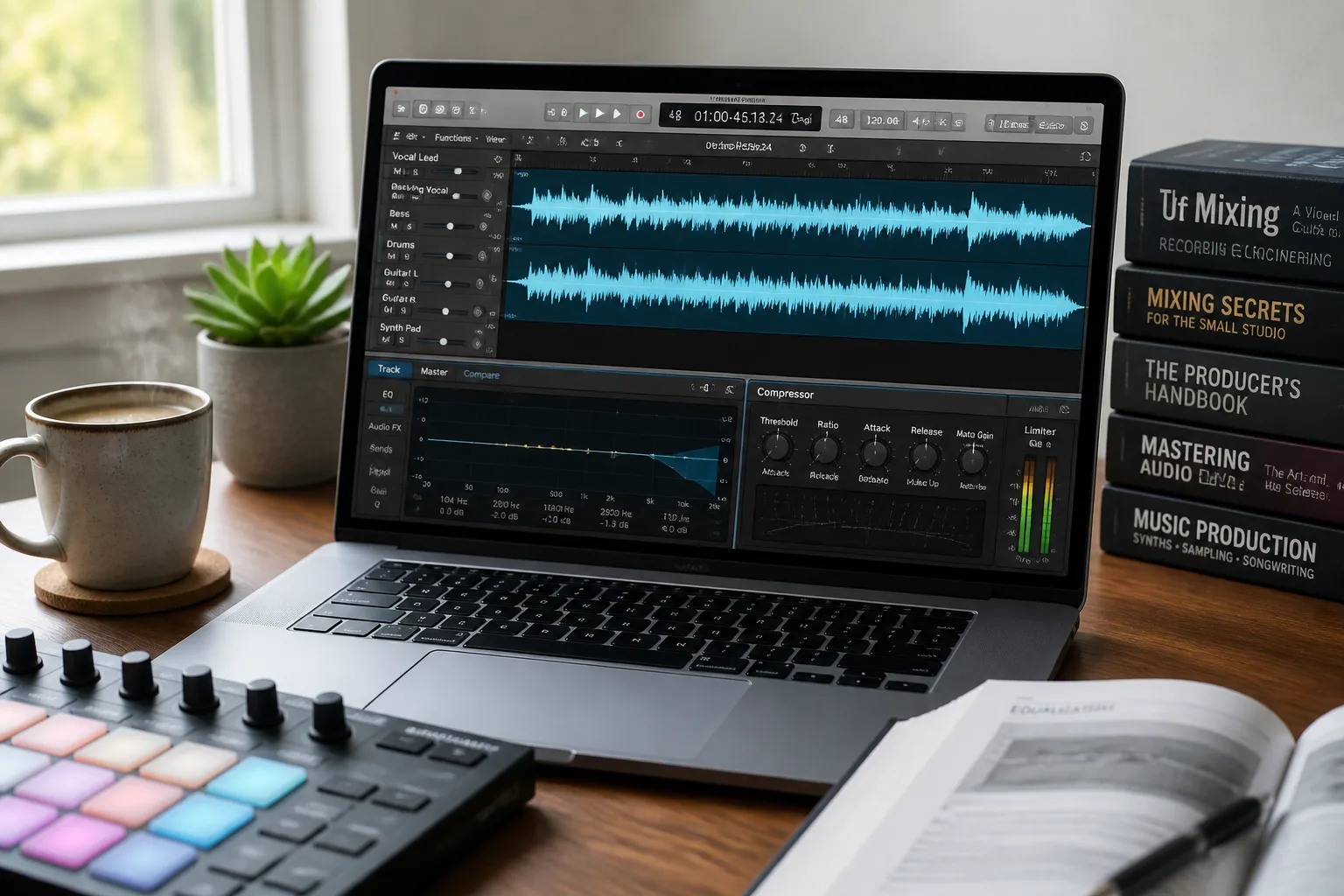
The shift from desktop to web has been powered by recent browser APIs that support audio, MIDI, graphics, and storage. These advances let full‑featured digital audio workstations (DAWs) operate in a browser with the same breadth of functionality as traditional software.
The most visible example is "OpenDAW", a free, open‑source DAW that runs entirely in a web browser. Built with TypeScript and the Web Audio API, OpenDAW offers a synthesizer, drum machine, audio recording, effects, and a modular signal‑routing interface. It also includes an SDK that lets developers script new instruments and plugins directly in the browser. The project emphasizes privacy: users do not need to sign up, and the software contains no tracking or subscription model.
OpenDAW’s creator, André Michelle, has said that the web’s platform‑independence and rapid update cycle make it an ideal environment for music production. The browser’s Web MIDI API lets users connect a hardware MIDI controller to the DAW, while WebGL provides the graphics needed for real‑time visualisation.
Other browser‑based DAWs have followed a similar path. Audiotool, a German platform that has been free since its launch, added a multiplayer mode and an open‑source SDK called NEXUS in version 3.0. The SDK allows developers to build instruments, effects, visualisers, and even hardware‑connected apps that run inside Audiotool. BandLab, a freemium service with a mobile app, also offers a browser‑based DAW that supports collaboration and distribution.
Beyond full DAWs, a number of standalone instruments and utilities have appeared online. Playtronica and Chromatone curate a Web Synths Collection that hosts more than 60 emulations of classic hardware, such as Roland’s Juno‑106 and Yamaha’s DX7. These instruments can be played with a computer keyboard or a MIDI controller, thanks to the Web MIDI API.
A small but growing ecosystem of web‑based editors has emerged for vintage synthesizers. Knob.Monster, for example, is a cloud‑based SysEx librarian that connects to instruments like the Yamaha DX7 and Roland Juno‑106 via USB‑MIDI. Digital Sunset Studios offers browser editors for Behringer’s Mini series, providing an alternative to legacy desktop software.
Utility tools that aid the production workflow also benefit from the web. Chppr is a free online sample slicer that lets users upload or record audio, slice it into pads, program patterns, and export WAV files. WavedStudio, a browser‑based wavetable editor, supports the 64‑frame, 2048‑sample format used by popular synths such as Serum and Vital. For users who need to convert wavetables between formats, Kimura Taro’s Batch Wavetable Converter and SCW Resynthesizer provide batch conversion and single‑cycle waveform creation.
The rise of browser‑based tools aligns with a broader trend toward democratised music production. Because the software runs in a browser, users can start a project on a Chromebook, a borrowed laptop, or a mobile device without installing anything. Collaboration is simplified: many platforms allow multiple users to join a session via a link, and the web’s stateless nature removes the need for account management.
The industry has responded to the growing demand for web‑native solutions. Audiotool’s NEXUS SDK has already attracted developers who are building AI‑connected instruments and educational content. BandLab’s large user base—over 60 million creators as of 2023—demonstrates the viability of a freemium model that relies on community sharing rather than paid licenses.
While browser‑based DAWs and instruments are not yet a full replacement for high‑end desktop software, they provide a viable alternative for many producers, especially those who value portability, low cost, and open‑source principles. The continued improvement of browser APIs and the active participation of developers suggest that the web will remain an important venue for music creation.
In short, the combination of Web MIDI, Web Audio API, and modern browsers has enabled a new generation of DAWs and tools that run entirely online. These solutions offer privacy‑focused, platform‑independent production environments that are accessible to anyone with an internet connection.