Latin Musics Global Rise Re-Defined at Taiwans Golden Melody Festival
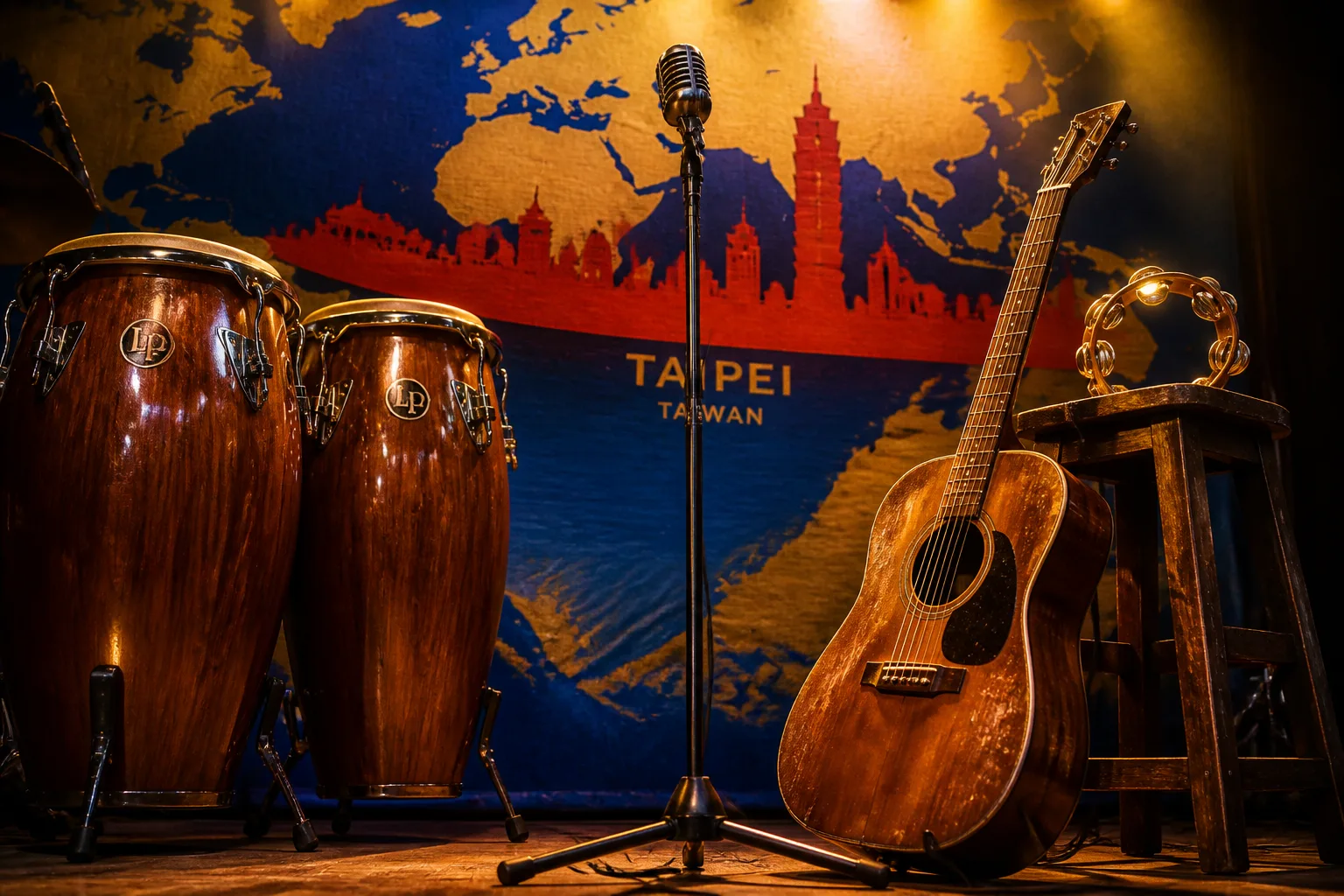
At the 2026 Golden Melody Festival in Taipei, Latin Recording Academy chief executive Manuel Abud turned a long‑held assumption on its head: English is no longer a prerequisite for Latin artists to reach a worldwide audience. Speaking to a packed room of industry leaders, Abud traced the genre’s evolution from early covers to the streaming‑era hit that proved language could be a strength, not a barrier.
The event, held just before the Golden Melody Awards, convened music executives, producers and creators from around the world. Abud opened with a keynote, “The Rise of Latin Music: From Regional Niche to Global Force,” and drew a comparison between Latin and Asian music, noting that both labels encompass diverse cultures and styles rather than single genres.
Latin music—performed primarily in Spanish and Portuguese—now reaches nearly 900 million listeners worldwide and generates billions in streaming revenue. Abud broke the genre’s growth into three distinct stages. The first stage introduced Latin sounds through timeless classics that were widely covered long before crossover became a strategy: Consuelo Velázquez’s “Bésame Mucho” (1940), Dámaso Pérez Prado’s “Mambo No. 5” (1949), Astrud Gilberto and Stan Getz’s “The Girl from Ipanema” (1964), and the Mexican folk tune “La Bamba.” These songs familiarized global audiences with Latin rhythms and laid the groundwork for future expansion.
The second stage followed immigration waves that brought Latin music into the U.S. mainstream. Artists such as Gloria Estefan, Ricky Martin and Shakira dominated the era, but their most significant international breakthroughs were performed in English. Abud highlighted Ricky Martin’s 1999 Grammy performance of “The Cup of Life” as the first major U.S. success for a Latin act.
The third stage began with streaming and social media, epitomized by a single track. Luis Fonsi’s 2017 hit “Despacito,” entirely in Spanish and rooted in Puerto Rican musical identity, proved that authenticity could drive global success. The song’s worldwide popularity shattered industry assumptions about language and marketability. Abud pointed to Bad Bunny as the most recent embodiment of this shift: the artist opened the 65th Grammy Awards in 2023, won Album of the Year in 2026 with a fully Spanish‑language record, and performed at the Super Bowl in 2026. He described Bad Bunny’s trajectory as evidence that the genre’s transformation has been decades in the making.
Abud also noted that streaming has opened growth in Europe, extending beyond traditional U.S. diaspora markets such as Puerto Ricans in New York and Cubans in Miami. He said the Latin Recording Academy is pleased to see its creators topping global charts and that this success reflects collaborative efforts over the last decades.
Looking ahead, Abud said collaboration will define Latin music’s next phase. “The lines between genres are becoming less defined as creators develop a fusion of sounds,” he said. “The next chapter of Latin music’s international expansion will be marked by collaborations.” Language is no longer the barrier it once was; what now drives audiences is honest storytelling, cross‑cultural collaboration and artistic authenticity. He concluded that the long‑standing industry belief—that English is required for worldwide reach—has been challenged by Latin music and K‑pop.
The Golden Melody discussion underscores how streaming, social media and authentic cultural expression have reshaped the global music landscape. Latin artists now chart worldwide without translating their lyrics, and the industry’s focus is shifting toward collaborative, genre‑blending projects that reflect a more interconnected world. As the Latin Recording Academy continues to promote its artists, the industry watches to see how these trends evolve in the coming years, especially as streaming platforms and social media continue to democratize music distribution and audience engagement.