Australian Creatives Rally in Canberra to Demand AI Licensing Agreements Under Existing Copyright Law
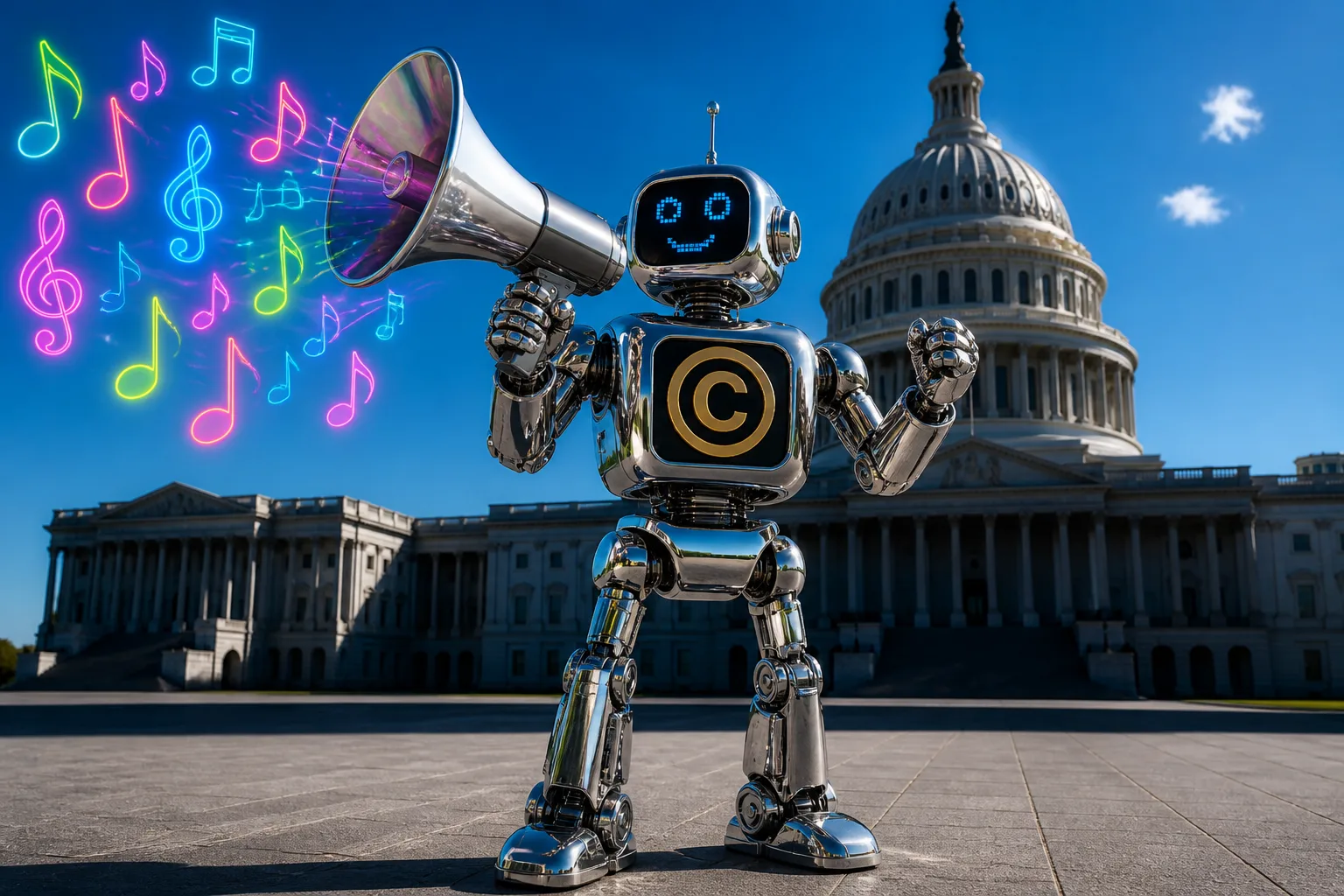
On 1 July 2026, a coalition of Australian artists, authors and industry bodies gathered at Parliament House in Canberra to urge the Albanese Government to enforce the country’s current copyright framework when dealing with artificial‑intelligence (AI) companies. The protest, attended by musicians such as William Barton, Paul Dempsey, Mahalia Barnes and Holly Rankin, and writers including Anna Funder and Francois Tetaz, was organized by the Australian Recording Industry Association (ARIA), the Australasian Performing Right Association (APRA AMCOS), the Australian Society of Authors, the Australian Writers’ Guild, the Australian Publishers Association, Mushroom Group, the Australian Music Publishers Association, Gyro, the Association of Artist Managers, the Copyright Agency and Free TV Australia.
The core demand is that the federal government use its influence to bring AI firms to the negotiating table and secure licensing agreements that mirror the licensing systems already in place for music and other creative works. Lucy Hayward of the Australian Society of Authors said, “If you want to use someone’s work, you need to ask permission. And copyright is also how authors earn a living.” She added that tech companies are lobbying for the right to use creators’ work in exchange for “chump change,” describing the practice as wage theft for the creative industries.
Annabelle Herd of ARIA echoed the call for a functioning licensing market. “We are standing at Parliament House today, united across the creative and media industries, to ask the Government to hold the line it drew in October and let the licensing market function as it should,” she said. She explained that licensing deals with AI companies are already occurring worldwide and that these agreements are the mechanism by which Australian creators receive payment.
Mahalia Barnes, a singer‑songwriter, emphasized the cultural significance of human creativity. “This is not just data. This is truly art. This is our culture, it’s the essence of our nation… Artists can never be replaced by technology and AI because art is essentially about humanity.”
The protest follows a broader debate in Australia about whether AI developers should be allowed to train models on copyrighted material without explicit consent. The Albanese Government has repeatedly stated it has no intention to relax copyright protections. In 2025, the government ruled out a text‑and‑data‑mining exemption that would have permitted AI companies to use publicly available copyrighted works for training purposes.
Industry bodies argue that without a clear licensing framework, AI firms could exploit Australian creative works without fair remuneration. The event highlighted that licensing agreements already exist for music, film, television and publishing, and that similar structures should apply to AI training. The Australian Copyright Act 1968, which governs the country’s copyright regime, remains unchanged, and the government has maintained that the Act provides sufficient protection for creators.
The gathering also drew attention to the role of collective management organisations such as APRA AMCOS, which administer performance and mechanical rights for over 100,000 songwriters and publishers. These organisations have long negotiated blanket licences for public performances and reproductions, and the creatives are calling for comparable blanket licences that cover AI training.
The protest is part of a series of actions by the creative community in response to the rapid growth of generative AI tools. Similar rallies have taken place in other countries, and the Australian event underscores the global concern that AI companies may use copyrighted material without proper licensing.
While the government has not yet announced a policy change, the protest signals that the creative sector remains vigilant. The Australian Parliament House session will likely include questions to the Minister for Communications and the Minister for Industry, Science and Technology, who are expected to respond to the demands.
The outcome of the protest will shape how AI companies engage with Australian creators in the coming years. Until a licensing framework is agreed, AI developers will continue to rely on the existing copyright law, which requires permission for use of protected works.
The protest concludes with a reminder that the creative community will continue to monitor the government’s actions and advocate for fair compensation for the use of Australian artistic and literary works in AI training.