
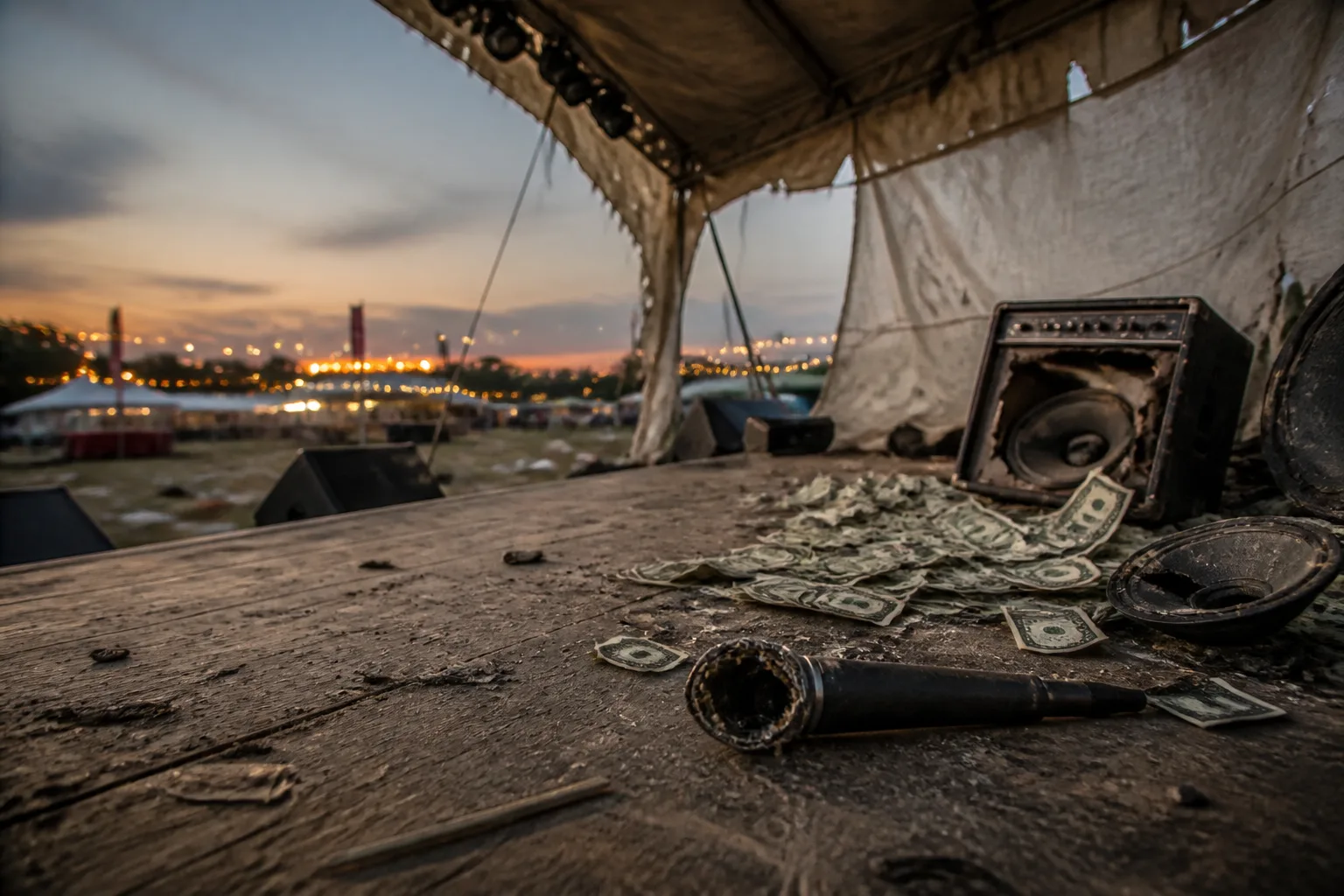
Cercle Cancels Mexico Festival Amid Financial Strain, Highlighting Wider Festival Industry Crisis
The 2026 Mexico edition of Cercle, the French company famed for staging electronic‑music spectacles in world‑iconic venues, has been called off.
Founder Derek Barbolla posted a terse note on social media, admitting that canceling the November 14‑15 event in San José del Cabo was the hardest decision the company has ever made. He blamed a post‑pandemic surge in costs and taxes that eroded margins to the point where the balance sheet could no longer hold.
The move follows an earlier public appeal for fan support—a first in the electronic‑music community—highlighting the growing financial strain on independent festivals.
Cercle’s plight is not isolated. In 2025, more than 100 festivals worldwide were axed, with the United States and the United Kingdom accounting for the majority. The Netherlands alone saw 50 cancellations, while the UK industry logged over 40 in both 2024 and 2025. Analysts refer to this wave as a “Great Correction” in the sector.
Other marquee festivals have openly disclosed their fiscal woes. Burning Man reported a $10.7 million net loss in 2024, with revenue of $57.5 million against expenses of $68.2 million. Ticket sales fell short of targets for the first time in more than a decade, prompting staff cuts, fundraising drives and a revised 2025 model. Envision Festival in Costa Rica postponed its 2025 edition, citing decades of unprofitability and cumulative losses that exceeded profits by millions. Balaton Sound in Hungary announced it could not continue, and Creamfields cancelled its Asian editions in 2025.
The financial squeeze on independent festivals is driven by several structural factors that have sharpened since 2020:
1. Infrastructure costs – Security, fencing, stages and insurance have risen 30‑50 % since 2019, driven by material and labour price spikes rather than general inflation. 2. Artist fees – Many performers now bypass festivals for arena tours, demanding higher guarantees to recoup pandemic losses. Advance payments often require full payment months before ticket sales. 3. Early‑bird model – Fans increasingly wait until the last minute to buy tickets, eroding the capital that early sales provide for production. 4. Winner‑takes‑all competition – Large‑scale stadium acts draw audiences that would otherwise attend mid‑tier festivals, reducing ticket revenue. 5. Oversaturation – Multiple festivals compete for the same headliners, making it harder to justify attendance at any single event.
By contrast, the live‑music industry as a whole remains profitable. Live Nation posted total revenues of $25.2 billion in 2025, up 9 % from the previous year, with operating income of $1.3 billion—a 52 % jump. Ticketmaster processed 346 million fee‑bearing tickets in 2025, generating $3.1 billion in revenue. Mega‑festivals such as Ultra Music Festival, EDC Las Vegas, Lollapalooza and Tomorrowland continue to thrive, buoyed by scale, brand investment and sponsorship.
The Association of Independent Festivals reports that Live Nation and its affiliates command 66.4 % of arena, stadium and outdoor concert tickets in the UK—well above the 25 % monopoly threshold. In the United States, a 2026 federal jury found Live Nation maintained an illegal monopoly in ticketing for major venues, with an 86 % market share in certain segments.
Revenue concentration at the infrastructure layer means that independent promoters, festival founders and local communities absorb most losses. Artists with leverage to command guaranteed fees and backend deals are insulated from the risk that falls on promoters. Production companies, insurance providers and platform infrastructure businesses continue to grow regardless of individual festival outcomes.
Cercle’s experience underscores the vulnerability of independent, risk‑taking projects that prioritize culture over profit. The company began with €10,000 worth of GoPros, microphones and a mixer, and grew into a record label, a festival and an archive of cinematic music experiences. Despite free YouTube distribution and a dedicated fan base, the company ran out of runway.
The current ecosystem appears unable to sustain such projects without structural change. Potential solutions include lower‑overhead festival formats, better cost‑sharing with artists, policy action on ticketing monopolies and fan‑supported funding models that activate before crises.
Barbolla has said the company will keep the community informed of next steps and is working to preserve the dream. The cancellation of the Mexico festival marks a significant moment for the independent festival scene, raising questions about the future viability of culturally driven events in an industry increasingly dominated by scale and corporate consolidation.
For those wishing to support Cercle directly, the company’s YouTube channel remains free, and all previously published content will stay available.