Indonesias Music Industry Expands Global Reach, Ministry and Spotify Report Growth
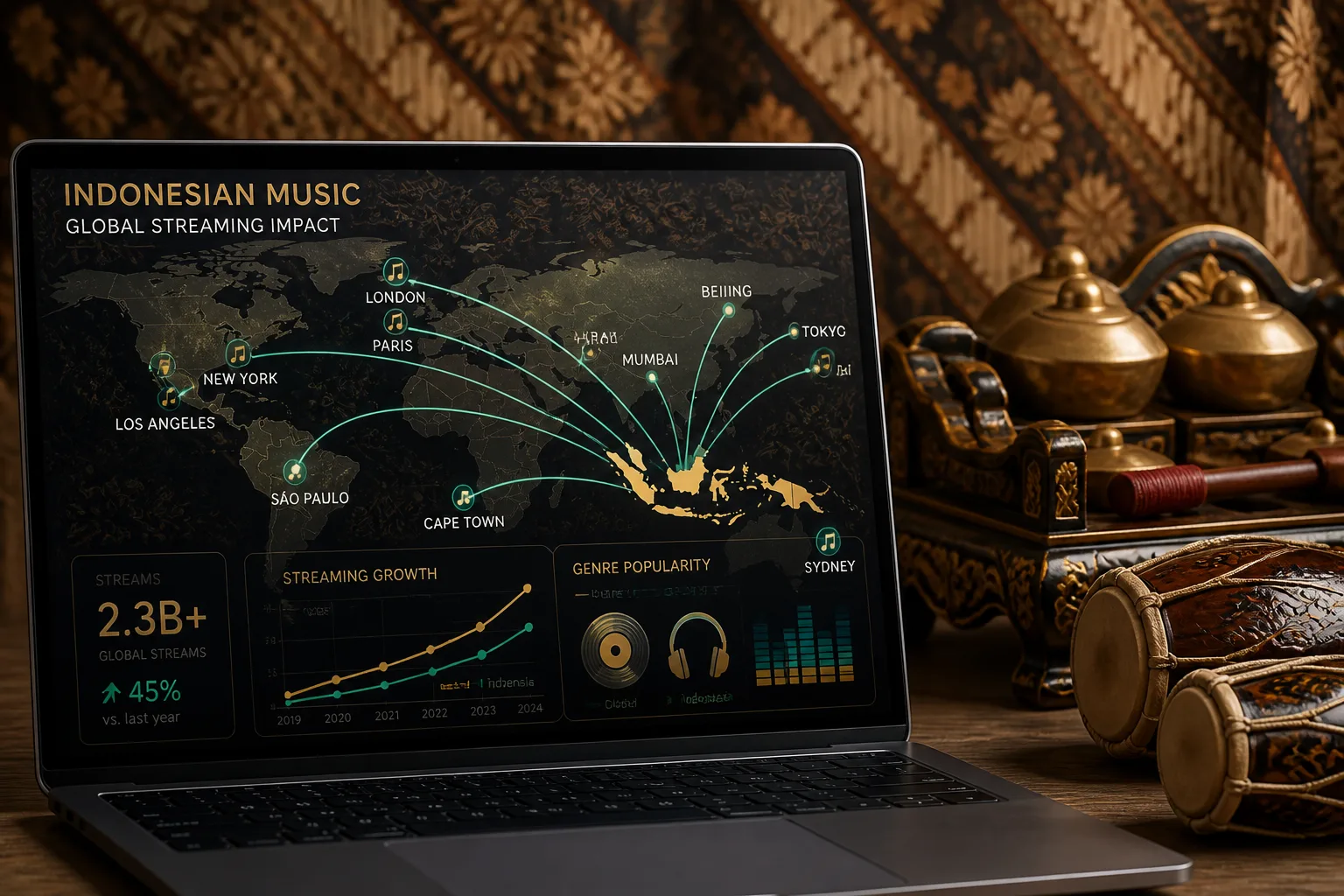
On 27 June 2026, the Ministry of Creative Economy of Indonesia released a statement outlining the country’s expanding music export and the role of streaming platforms in that growth. The ministry highlighted that Indonesian songs are now being streamed in markets such as the United States, Germany, Japan, Malaysia and the United Kingdom, and that the creative economy sector employs 27.4 million workers, more than half of whom are Generation Z and millennials.
The ministry’s statement, issued on Saturday, emphasized that music is a vehicle for presenting Indonesian stories, culture and identity to the world. Minister Teuku Riefky Harsya said that when Indonesian tracks are played in foreign markets, it demonstrates the strength of Indonesia’s creative economy and its expanding global influence. He added that streaming platforms have broadened access to the industry and provide more equal opportunities for musicians from different regions to gain recognition.
According to the ministry, collaboration between government, the creative industry and creators is essential for building a fair, sustainable and economically valuable music ecosystem. The ministry also reiterated its vision of helping local talent compete in regional and global markets, stressing that synergy between public policy and industry practice is a key element.
Spotify Southeast Asia Managing Director Gustav Back provided data that supports the ministry’s assessment. In 2025, Indonesian music was discovered more than 6.3 billion times by new listeners on Spotify. Royalties earned by Indonesian musicians through the platform rose by more than 16 percent from the previous year, with around 60 percent of that increase generated by overseas listeners. Spotify data also showed that 80 percent of songs featured in the 2025 Spotify Indonesia Daily Top 50 chart were by Indonesian artists.
Back noted that Indonesian music continues to grow among listeners both at home and abroad, including in the United States, Germany, Japan, Malaysia and the United Kingdom. He said that Spotify remains committed to helping musicians reach new listeners and build fan communities.
The ministry’s employment figures come from Statistics Indonesia (BPS). In 2025, the creative economy sector employed 27.4 million people, accounting for 18.7 percent of the national workforce. The sector’s growth reflects confidence in job creation, investment attraction and the country’s presence on global platforms.
The ministry’s statement also referenced related initiatives. A related news item notes that the ministry targets a 4 % annual growth in the local game market. Another related article reports that the ministry is encouraging youth to use artificial intelligence to boost the creative economy.
The data presented by Spotify and the ministry illustrate a convergence of policy and platform metrics that point to a robust expansion of Indonesian music on the world stage. The figures show that streaming services are a key distribution channel, while government policy is creating an enabling environment for creators.
The current situation is that Indonesian artists continue to dominate domestic charts and are increasingly visible in international playlists. The ministry and Spotify’s data suggest that the trend is likely to continue, supported by a large and youthful workforce and a growing number of creators leveraging digital platforms.
The next steps for the industry will involve monitoring royalty flows, expanding international licensing agreements, and sustaining the collaborative framework between government, industry bodies and artists. The ministry has indicated that it will continue to work with stakeholders to ensure that the music ecosystem remains inclusive, competitive and financially viable.
In summary, Indonesia’s music industry is experiencing measurable growth in global reach, driven by streaming platforms and supported by government policy. The combination of increased discovery, higher royalties, and a large creative workforce positions the country to maintain its upward trajectory in the international music market.